Physical Address
304 North Cardinal St.
Dorchester Center, MA 02124
Physical Address
304 North Cardinal St.
Dorchester Center, MA 02124

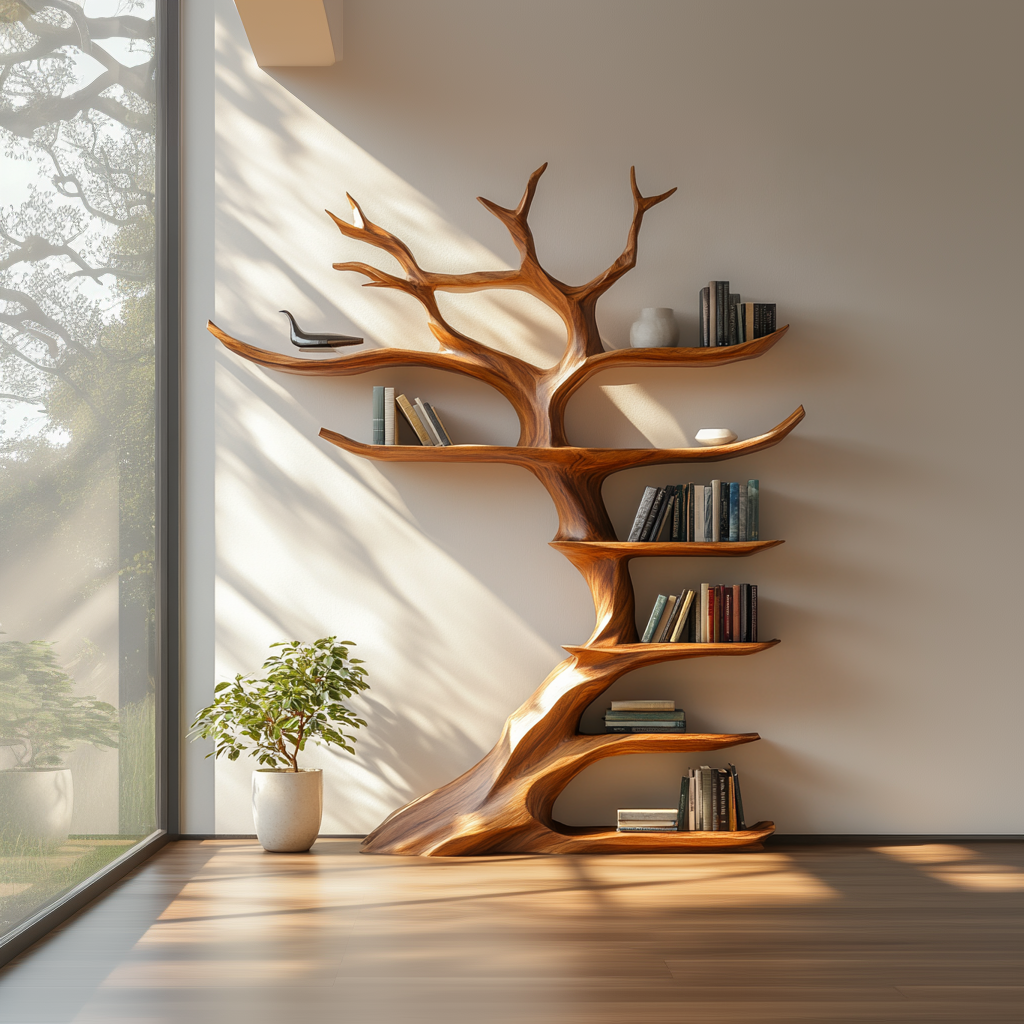
Explore how a modern tree shaped bookshelf adds sculptural storage, clean lines, and space-saving function to minimalist interiors.
A tree shaped bookshelf offers something many storage pieces cannot: practical organization with the visual impact of modern art. For minimalist homes, that combination matters. Minimalism is not about empty rooms or avoiding personality. It is about choosing fewer, better pieces that work hard, look refined, and support a calm living environment. A thoughtfully selected tree bookshelf does exactly that by turning vertical storage into a design feature without overwhelming the room.
In contemporary interiors, the appeal of a tree shaped bookshelf comes from its balance of form and function. The branching silhouette creates visual movement, while the narrow footprint helps maximize floor space. Whether placed in a studio apartment, a reading nook, a hallway, or a living room, this style can display books, small plants, and curated decorative objects while still preserving the clean aesthetic that minimalist spaces depend on.
This guide covers what makes a modern tree shaped bookshelf ideal for minimalist homes, what features to prioritize, how to choose the right size and finish, and which design directions are worth considering before you buy.
Minimalist interiors rely on clarity, proportion, and intentional design. Traditional bulky bookcases can feel heavy, especially in smaller homes. A modern tree shaped bookshelf solves that issue by introducing storage that appears lighter and more architectural.
For homeowners who want furniture that doubles as a focal point, a tree bookshelf is often a smarter choice than a standard rectangular case. It can anchor an empty wall, soften a sharp corner, or enhance a neutral room with subtle geometry.
Not every tree shaped bookshelf is suited to a minimalist home. Some designs lean overly decorative, while others sacrifice usability for novelty. The best options combine strong construction, refined lines, and practical shelf spacing.
Look for a design with simple branching patterns and a balanced profile. Minimalist interiors benefit from symmetry or controlled asymmetry, not overly complex forms. A bookshelf that resembles an abstract tree rather than a whimsical prop usually integrates better into modern spaces.
Popular finishes for a minimalist tree shaped bookshelf include matte white, black, oak, walnut, ash, and soft gray. Natural wood tones warm up clean interiors, while monochrome finishes create a crisp and contemporary appearance.
Materials affect both durability and aesthetics. Engineered wood can provide affordability and consistency, while solid wood offers longevity and richer texture. Powder-coated metal hybrids can also work well in ultra-modern homes, especially when paired with clean-lined decor.
Because the structure is vertical, stability matters. Choose a tree bookshelf with a strong base and anti-tip wall anchoring. This is especially important in homes with children or pets.
Some artistic bookshelves look striking but hold very little. Check the actual depth and spacing of each shelf. The ideal design should accommodate standard books, paperbacks, and a few decorative objects without making placement awkward.

The phrase tree shaped bookshelf covers several design variations. Choosing the right type depends on your floor plan, storage needs, and preferred aesthetic.
This is one of the most popular options for minimalist homes. It features a compact base with angled shelves extending from a central spine. The slim profile makes it ideal for apartments, bedrooms, and corners where floor space is limited. It works especially well for readers who want visible, accessible book storage without a large furniture footprint.
A ladder-style interpretation blends the structure of a leaning shelf with branch-like shelf placement. This version feels especially light and modern, making it a natural fit for Scandinavian and Japandi interiors. It can display books alongside ceramics, candles, or trailing plants while preserving a clean atmosphere.
Some modern models use geometric angles instead of literal branch forms. These are excellent for homes that favor a contemporary or architectural look. In black metal or dark walnut, a geometric tree bookshelf can become a bold focal point while still supporting a disciplined minimalist palette.
If you want to maximize underused space, a corner version is particularly effective. It transforms empty corners into functional display areas and helps smaller rooms feel more efficient. This style is practical in compact home offices, reading corners, and entryways.
A floating tree bookshelf is ideal for very small homes or minimalist rooms where visual openness is a priority. Because it lifts storage off the floor, it keeps the room looking larger. This option can be particularly effective in a hallway, above a desk, or beside a bed.
Scale is essential in minimalist design. Even a beautiful tree bookshelf can feel out of place if it is too tall, too narrow for the wall, or too small to be useful.
Before buying, measure:
As a rule, a narrow tree shaped bookshelf works best in compact spaces, while a taller and slightly wider model suits larger living rooms or dedicated reading areas. In minimalist homes, leaving some negative space around the shelf is important. This breathing room helps the design feel intentional rather than crowded.
Finish selection influences how the bookshelf interacts with the rest of the room. Minimalist spaces often depend on a restrained material palette, so the bookshelf should support that visual harmony.

These finishes bring warmth and softness. They pair well with white walls, linen textiles, and neutral rugs. If your home leans Scandinavian or Japandi, light wood is one of the safest choices.
Walnut offers depth and sophistication without excessive visual weight. In minimalist interiors with beige, cream, charcoal, or muted green accents, walnut creates a rich contrast.
A white tree bookshelf blends into pale walls and contributes to a clean, seamless effect. It is especially useful when you want books and objects to stand out more than the furniture itself.
Black works best as a graphic accent in modern minimalist homes. It adds definition and can complement black-framed art, lighting, or hardware. To prevent heaviness, keep styling restrained.
A tree bookshelf is easy to overstyle because the branch-like shelves invite visual experimentation. In a minimalist home, the goal is to preserve calm while still making the piece feel lived-in and intentional.
Do not try to fit every book you own onto one shelf. Choose a well-edited selection of frequently read titles or visually cohesive hardcovers. Group by size or color only if it enhances order rather than feeling overly staged.
A ceramic vase, a candle, or a sculptural object can complement the lines of the shelf. Avoid filling every empty shelf. Negative space is essential to the minimalist effect.
A small trailing plant or compact potted plant can soften the shelf’s angular lines. Keep planters simple and neutral to maintain the modern aesthetic.
Distribute books and objects evenly so the shelf looks visually balanced. Cluster heavier items lower and leave upper sections lighter. This supports both physical stability and better composition.
Try to repeat colors already present in the room. If your space uses warm neutrals, black and white, or natural wood tones, echo those shades in the books and accessories you display.
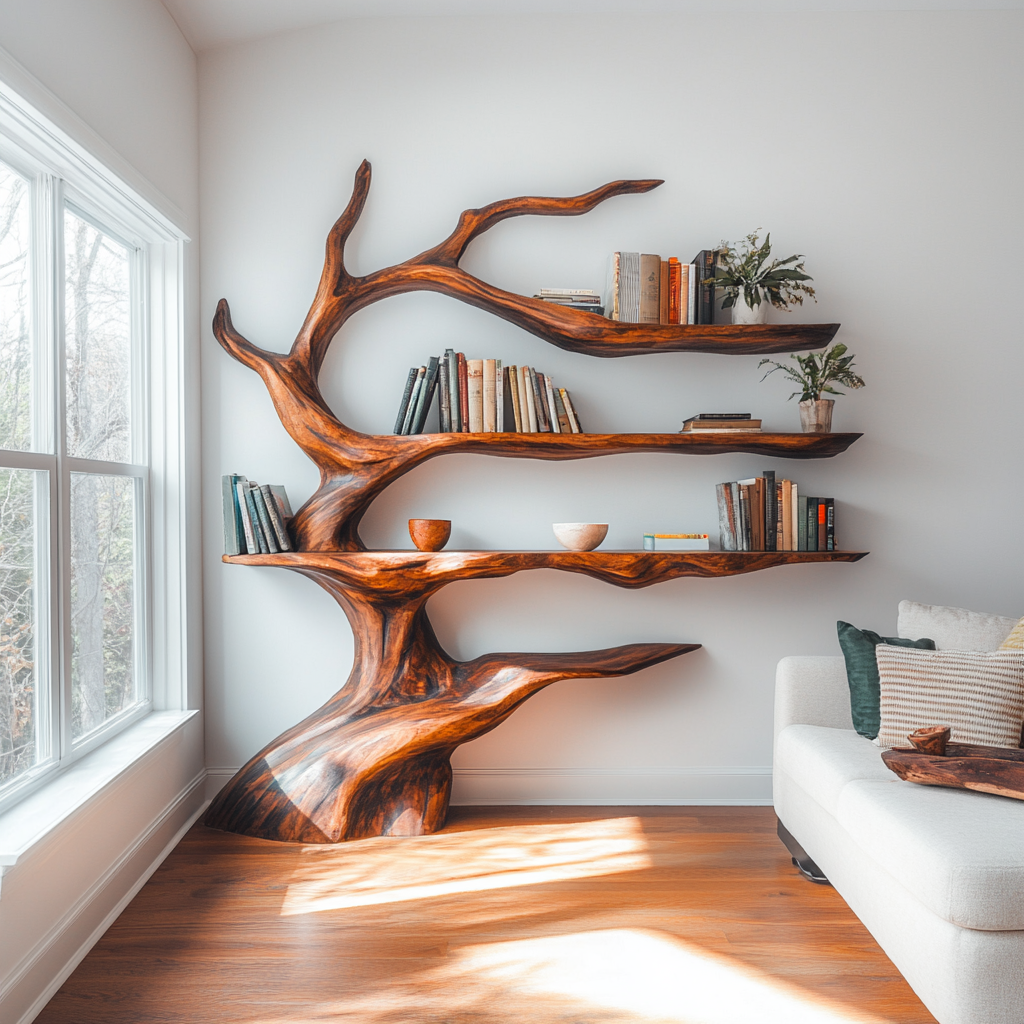
One advantage of a tree shaped bookshelf is its adaptability. It can function in spaces where a standard bookcase might feel too bulky.
Place it beside a sofa, near an armchair, or on a feature wall. In the living room, it can serve as both storage and sculpture.
A slim tree bookshelf works beautifully in a bedroom corner, especially in rooms with limited built-in storage. It can hold bedtime reading, a diffuser, and a few personal objects without needing a full dresser-height bookcase.
In a compact office, a tree bookshelf helps organize books and reference materials while keeping the floor plan open. It also adds visual texture to a room that may otherwise be dominated by desks and screens.
If you have a wider hallway or open entry, a narrow tree bookshelf can provide unexpected functionality. Style it with books, a small tray, and restrained decor to make the area feel considered.
Few furniture pieces suit a reading corner as naturally as a tree bookshelf. Paired with a lounge chair, floor lamp, and textured throw, it creates a refined and practical retreat.
To get the best result, avoid the most common errors shoppers make when choosing a tree bookshelf.
For many homeowners, the answer is yes. A quality tree shaped bookshelf delivers more than storage. It acts as a compact design statement, supports vertical organization, and complements the core values of minimalist living: intentionality, simplicity, and beauty through function.
If your home needs a piece that organizes books without introducing visual heaviness, this style is a strong investment. It is particularly worthwhile in small apartments, open-plan living spaces, and modern homes where every item needs to justify both its footprint and its appearance.
The best modern tree shaped bookshelf for a minimalist home is one that feels calm, practical, and well-proportioned. Prioritize a clean silhouette, durable materials, and a finish that supports your overall palette. Think carefully about scale, shelf depth, and how much storage you actually need. Most importantly, style it with restraint so the piece can do what it does best: bring structure, personality, and elegance to your space.
Whether you prefer warm oak, dramatic black, or a crisp white finish, a thoughtfully chosen tree bookshelf can transform an ordinary wall into a functional focal point. In minimalist interiors, where every detail matters, that kind of smart design makes all the difference.
